Paediatrics and Child Health Technology Conference
2-3 December 2026 | Sheffield, UK & Online

Please note that this event is supported by industry sponsorship, including pharmaceutical and medical technology companies. Sponsors have no influence over the agenda or the selection of speakers, except for sponsored sessions which will be clearly labelled in the programme.
Confirmed Speakers
DAY TWO
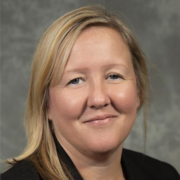
MRS JENNIFER PRESTON
Patient and Public Involvement and Engagement (PPIE) Executive Lead
NIHR HealthTech Research Centre in Paediatrics and Child Health
Patient and Public Involvement Policy Manager
University of Liverpool
SEMINAR
“Not just a voice: the right to influence” – Reimagining children and young people’s involvement in health technology innovation”
Read bio
Jenny Preston is PPIE Executive Lead for the NIHR HealthTech Research Centre in Paediatrics and Child Health, where she leads approaches to ensuring children, young people and families meaningfully influence the development of HealthTech for paediatric care. She brings more than 20 years’ national and international experience in patient and public involvement and engagement, specialising in children’s and young people’s participation in health research. Her work focuses on moving involvement beyond consultation towards meaningful partnership and embedding participation within research culture, structures and decision-making. Jenny’s doctoral research examined the organisational conditions required to enable meaningful, sustained and rights-based participation, complementing her practical leadership in ensuring HealthTech innovation is shaped with, rather than simply for, children, young people and families.
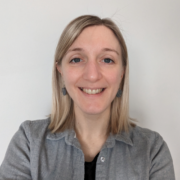
DR GEMMA WHEELER
Senior Project Manager
NIHR HealthTech Research Centre in Paediatrics and Child Health
SEMINAR
“Not just a voice: the right to influence” – Reimagining children and young people’s involvement in health technology innovation”
Read bio
Dr Gemma Wheeler is a Senior Project Manager overseeing patient and public involvement and engagement (PPIE) and research inclusion programmes at the NIHR HealthTech Research Centre in Paediatrics and Child Health. She works closely with families and experts from healthcare, academia and industry across the innovation pipeline, from unmet need identification through to implementation and evaluation within complex healthcare service systems. She is particularly interested in bringing design-based methods (such as visualisation and prototyping) into healthcare and community contexts to elicit and legitimise different forms of knowledge across disciplines and hierarchies. Her approach considers everyone as able to contribute creatively and collaboratively to service/product development when supported by appropriately designed tools and activities.
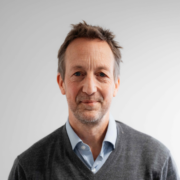
DR CHRIS BIRD
Consultant in Paediatric Emergency Medicine & Emergency Medicine Research Lead
Birmingham Children’s Hospital
Deputy Theme Lead for Acute Paediatrics and Infections
NIHR HealthTech Research Centre in Community Healthcare
KEYNOTE
“Take the test to the child: reimagining paediatric diagnostics”
Read bio
Consultant in paediatric emergency medicine at Birmingham Children’s Hospital with a research interest in implementation of integrated care for children, young people and their families, health equity and the role of point-of-care diagnostics in improving patient journeys.
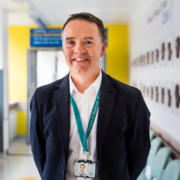
PROFESSOR DON SHARKEY
Professor of Neonatal Medicine & Technologies
University of Nottingham
Honorary Neonatal Consultant
Nottingham University Hospitals NHS Trust
Clinical Director
SurePulse Medical
SEMINAR
“Developing technologies for unique needs of high-risk newborns”
Read bio
Prof Sharkey is the Professor of Neonatal Medicine and Technologies at the University of Nottingham. His research portfolio focuses on the discovery, translation and application of neonatal technologies with specific interests in the reducing brain injury in high-risk infants. He has taken devices from concept, through the technology pipeline, and into clinical practice. He believes in multi-disciplinary collaboration and closely works with engineers, scientists and parents to co-develop devices that are designed specifically for the unique needs of high-risk newborns. He is the Early Life theme lead at the NIHR HealthTech Research Centre for Paediatrics and Child Health, Director of the Centre for Perinatal Research at the University of Nottingham, and a practising neonatologist at the Nottingham Centre for Newborn Care. He is passionate about neonatal MedTech and is always looking out for new discovery science that could perhaps be developed to enhance neonatal care and outcomes.
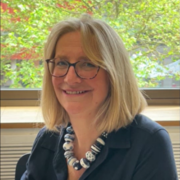
PROFESSOR KATHRYN BEARDSALL
Associate Professor
University of Cambridge
SEMINAR
“Non-invasive monitoring in NICU”
Read bio
Professor Kathryn Beardsall is Associate Professor of Paediatrics at the University of Cambridge and Honorary Consultant Neonatologist at Cambridge University Hospitals NHS Foundation Trust. Her research focuses on improving neonatal care through innovation in monitoring technologies designed for the needs of babies in NICU.
She was the first to demonstrate the potential of continuous glucose monitoring (CGM) in preterm infants, work that has helped drive international clinical trials and increasing adoption of CGM in neonatal practice. Her research aims to highlight how technology can improve understanding of neonatal physiology and clinical care.
Combining clinical practice with translational research, she works closely with families, patient groups, clinicians and engineers to develop technologies that can be effectively integrated into routine care. She also serves as Paediatric Lead for the East of England Research Delivery Network and is Co-Theme Lead for the Mind and Body programme within the NIHR HealthTech Research Centre in Paediatrics and Child Health.
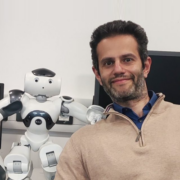
PROFESSOR ALESSANDRO DI NUOVO
Director
Centre of Excellence in Artificial Intelligence and Robotics
Professor of Machine Intelligence
Sheffield Hallam University
SEMINAR
“Intelligent Robots in the Education and Care of Children”
Read bio
Prof. Alessandro Di Nuovo, Ph.D. is Director of Centre of Excellence in Artificial Intelligence and Robotics and Professor of Machine Intelligence at Sheffield Hallam University. He is the founder of the Smart Interactive Technologies (SIT) Research Laboratory that leads research pioneer research and innovation in healthcare and wellbeing.
Prof. Di Nuovo earned his Ph.D. in Informatics Engineering from the University of Catania (Italy) and collaborates widely with clinicians, educators, and industry partners to translate cutting-edge research into practical solutions that improve quality of life for children and families.
Prof. Di Nuovo is internationally recognized for pioneering work on social robotics for children with neurodevelopmental disorders, particularly ASD. His research integrates AI-driven personalization, cognitive modelling, and multimodal interaction to design humanoid robots that support therapeutic and educational interventions, enhancing engagement, communication, and social skill development in inclusive environments. He has authored over 120 peer-reviewed publications, holds an h-index of 32 with 3,600+ citations, and serves on the Editorial Board of the IEEE Journal of Translational Engineering in Health and Medicine. His projects have received funding from EU Horizon 2020, UKRI (EPSRC), IBM, NVIDIA, and healthcare charities.
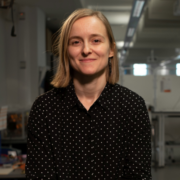
DR DANA DAMIAN
Senior Lecturer
University of Sheffield
Smart Sensors and Devices Lead
Insigneo Institute for Healthcare Technology
SEMINAR
“Soft Robotic Technologies for Paediatric Healthcare”
Read bio
Dana D Damian is a Senior Lecturer (Associate Professor) in the School of Electrical and Electronic Engineering at the University of Sheffield. She received her PhD from the University of Zurich in 2012. She was a visiting scholar at Johns Hopkins University, Stanford University, and Carnegie Mellon University (2011/2013). She was a postdoctoral research fellow at Boston Children’s Hospital, Harvard Medical School before joining the University of Sheffield. She leads the Sheffield Biomedical Robotics Laboratory where her group’s mission is to develop bionic and implantable devices that show life-like behaviour and sustain operation for long-term therapies, and are minimally invasive, in order to advance surgical treatments and regenerative medicine. Her research has been supported by EPSRC, MRC, Academy of Medical Sciences, Royal Society and SNSF, and highlighted on BBC, at House of Lords, etc.
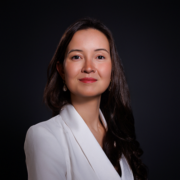
PROFESSOR SUSAN SHELMERDINE
Consultant Radiologist
Great Ormond Street Hospital
SPOTLIGHT
“AI Youth Council”
Read bio
Susan Shelmerdine is a clinical academic and consultant radiologist at Great Ormond Street Hospital for Children, Hon Assoc Professor at UCL, Hon Visiting Professor at City St George’s and also Hon Senior Lecturer at the University of Glasgow. Her research is funded by the NIHR and explores how we can build, implement and evaluate AI models for paediatric imaging tests. She sits on the Royal College of Radiologists AI Advisory Board and is co-lead for the AI Youth Council.
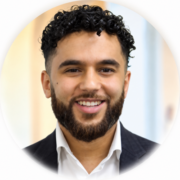
DR QASIM MALIK
AI Academic Clinical Fellow
BRIGHT Team, University of Birmingham
SPOTLIGHT
“AI Youth Council”
Read bio
Dr Qasim Malik is a Paediatric Respiratory Medicine Registrar and NIHR Academic Clinical Fellow in AI and Digital Health at the University of Birmingham. His work sits at the intersection of child health, artificial intelligence and patient involvement, with a focus on making emerging technologies safe, useful and accountable.
He is a founding co-lead of the AI Youth Council, a national initiative giving children and young people a meaningful voice in how AI is developed, evaluated and governed in healthcare. His research spans AI failure, medical algorithmic audit, large language models as medical devices, and AI-based screening in paediatrics.
Qasim is also Vice Chair of the Royal College of Paediatrics and Child Health Trainee Executive Committee and an Associate and Trainee Editor at two paediatric focussed journals. He is passionate about ensuring the future of healthcare technology is shaped not just for children and young people, but with them.
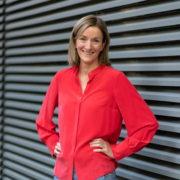
DR CLAIRE LILLEY
Manager
Responsible AI Testing for Child Safety at Google
KEYNOTE
“Using clinical and research evidence to develop best practice in online age estimation: a partnership between the RCPCH and Google”
Read bio
Dr. Claire Lilley is the Head of Responsible AI Testing for Child Safety at Google, leading safety evaluation and risk mitigation for Google and DeepMind’s next-generation AI technologies. With a career spanning a variety of leadership roles at Google and policy advocacy at the UK’s National Society for the Prevention of Cruelty to Children (NSPCC), Claire has dedicated over twenty years to building safer digital spaces. She holds a Doctorate in Leadership in Children and Young People’s Services, specializing in technology-driven child protection frameworks, and is a former trustee of the Internet Watch Foundation.
DAY TWO
MRS JENNIFER PRESTON
Patient and Public Involvement and Engagement (PPIE) Executive Lead
NIHR HealthTech Research Centre in Paediatrics and Child Health
Patient and Public Involvement Policy Manager
University of Liverpool
SEMINAR
“Not just a voice: the right to influence” – Reimagining children and young people’s involvement in health technology innovation”
Read bio
Jenny Preston is PPIE Executive Lead for the NIHR HealthTech Research Centre in Paediatrics and Child Health, where she leads approaches to ensuring children, young people and families meaningfully influence the development of HealthTech for paediatric care. She brings more than 20 years’ national and international experience in patient and public involvement and engagement, specialising in children’s and young people’s participation in health research. Her work focuses on moving involvement beyond consultation towards meaningful partnership and embedding participation within research culture, structures and decision-making. Jenny’s doctoral research examined the organisational conditions required to enable meaningful, sustained and rights-based participation, complementing her practical leadership in ensuring HealthTech innovation is shaped with, rather than simply for, children, young people and families.
DR GEMMA WHEELER
Senior Project Manager
NIHR HealthTech Research Centre in Paediatrics and Child Health
SEMINAR
“Not just a voice: the right to influence” – Reimagining children and young people’s involvement in health technology innovation”
Read bio
Dr Gemma Wheeler is a Senior Project Manager overseeing patient and public involvement and engagement (PPIE) and research inclusion programmes at the NIHR HealthTech Research Centre in Paediatrics and Child Health. She works closely with families and experts from healthcare, academia and industry across the innovation pipeline, from unmet need identification through to implementation and evaluation within complex healthcare service systems. She is particularly interested in bringing design-based methods (such as visualisation and prototyping) into healthcare and community contexts to elicit and legitimise different forms of knowledge across disciplines and hierarchies. Her approach considers everyone as able to contribute creatively and collaboratively to service/product development when supported by appropriately designed tools and activities.
DR CHRIS BIRD
Consultant in Paediatric Emergency Medicine & Emergency Medicine Research Lead
Birmingham Children’s Hospital
Deputy Theme Lead for Acute Paediatrics and Infections
NIHR HealthTech Research Centre in Community Healthcare
KEYNOTE
“Take the test to the child: reimagining paediatric diagnostics”
Read bio
Consultant in paediatric emergency medicine at Birmingham Children’s Hospital with a research interest in implementation of integrated care for children, young people and their families, health equity and the role of point-of-care diagnostics in improving patient journeys.
PROFESSOR DON SHARKEY
Professor of Neonatal Medicine & Technologies
University of Nottingham
Honorary Neonatal Consultant
Nottingham University Hospitals NHS Trust
Clinical Director
SurePulse Medical
SEMINAR
“Developing technologies for unique needs of high-risk newborns”
Read bio
Prof Sharkey is the Professor of Neonatal Medicine and Technologies at the University of Nottingham. His research portfolio focuses on the discovery, translation and application of neonatal technologies with specific interests in the reducing brain injury in high-risk infants. He has taken devices from concept, through the technology pipeline, and into clinical practice. He believes in multi-disciplinary collaboration and closely works with engineers, scientists and parents to co-develop devices that are designed specifically for the unique needs of high-risk newborns. He is the Early Life theme lead at the NIHR HealthTech Research Centre for Paediatrics and Child Health, Director of the Centre for Perinatal Research at the University of Nottingham, and a practising neonatologist at the Nottingham Centre for Newborn Care. He is passionate about neonatal MedTech and is always looking out for new discovery science that could perhaps be developed to enhance neonatal care and outcomes.
PROFESSOR KATHRYN BEARDSALL
Associate Professor
University of Cambridge
SEMINAR
“Non-invasive monitoring in NICU”
Read bio
Professor Kathryn Beardsall is Associate Professor of Paediatrics at the University of Cambridge and Honorary Consultant Neonatologist at Cambridge University Hospitals NHS Foundation Trust. Her research focuses on improving neonatal care through innovation in monitoring technologies designed for the needs of babies in NICU.
She was the first to demonstrate the potential of continuous glucose monitoring (CGM) in preterm infants, work that has helped drive international clinical trials and increasing adoption of CGM in neonatal practice. Her research aims to highlight how technology can improve understanding of neonatal physiology and clinical care.
Combining clinical practice with translational research, she works closely with families, patient groups, clinicians and engineers to develop technologies that can be effectively integrated into routine care. She also serves as Paediatric Lead for the East of England Research Delivery Network and is Co-Theme Lead for the Mind and Body programme within the NIHR HealthTech Research Centre in Paediatrics and Child Health.
PROFESSOR ALESSANDRO DI NUOVO
Director
Centre of Excellence in Artificial Intelligence and Robotics
Professor of Machine Intelligence
Sheffield Hallam University
SEMINAR
“Intelligent Robots in the Education and Care of Children”
Read bio
Prof. Alessandro Di Nuovo, Ph.D. is Director of Centre of Excellence in Artificial Intelligence and Robotics and Professor of Machine Intelligence at Sheffield Hallam University. He is the founder of the Smart Interactive Technologies (SIT) Research Laboratory that leads research pioneer research and innovation in healthcare and wellbeing.
Prof. Di Nuovo earned his Ph.D. in Informatics Engineering from the University of Catania (Italy) and collaborates widely with clinicians, educators, and industry partners to translate cutting-edge research into practical solutions that improve quality of life for children and families.
Prof. Di Nuovo is internationally recognized for pioneering work on social robotics for children with neurodevelopmental disorders, particularly ASD. His research integrates AI-driven personalization, cognitive modelling, and multimodal interaction to design humanoid robots that support therapeutic and educational interventions, enhancing engagement, communication, and social skill development in inclusive environments. He has authored over 120 peer-reviewed publications, holds an h-index of 32 with 3,600+ citations, and serves on the Editorial Board of the IEEE Journal of Translational Engineering in Health and Medicine. His projects have received funding from EU Horizon 2020, UKRI (EPSRC), IBM, NVIDIA, and healthcare charities.
DR DANA DAMIAN
Senior Lecturer
University of Sheffield
Smart Sensors and Devices Lead
Insigneo Institute for Healthcare Technology
SEMINAR
“Soft Robotic Technologies for Paediatric Healthcare”
Read bio
Dana D Damian is a Senior Lecturer (Associate Professor) in the School of Electrical and Electronic Engineering at the University of Sheffield. She received her PhD from the University of Zurich in 2012. She was a visiting scholar at Johns Hopkins University, Stanford University, and Carnegie Mellon University (2011/2013). She was a postdoctoral research fellow at Boston Children’s Hospital, Harvard Medical School before joining the University of Sheffield. She leads the Sheffield Biomedical Robotics Laboratory where her group’s mission is to develop bionic and implantable devices that show life-like behaviour and sustain operation for long-term therapies, and are minimally invasive, in order to advance surgical treatments and regenerative medicine. Her research has been supported by EPSRC, MRC, Academy of Medical Sciences, Royal Society and SNSF, and highlighted on BBC, at House of Lords, etc.
PROFESSOR SUSAN SHELMERDINE
Consultant Radiologist
Great Ormond Street Hospital
SPOTLIGHT
“AI Youth Council”
Read bio
Susan Shelmerdine is a clinical academic and consultant radiologist at Great Ormond Street Hospital for Children, Hon Assoc Professor at UCL, Hon Visiting Professor at City St George’s and also Hon Senior Lecturer at the University of Glasgow. Her research is funded by the NIHR and explores how we can build, implement and evaluate AI models for paediatric imaging tests. She sits on the Royal College of Radiologists AI Advisory Board and is co-lead for the AI Youth Council.
DR QASIM MALIK
AI Academic Clinical Fellow
BRIGHT Team, University of Birmingham
SPOTLIGHT
“AI Youth Council”
Read bio
Dr Qasim Malik is a Paediatric Respiratory Medicine Registrar and NIHR Academic Clinical Fellow in AI and Digital Health at the University of Birmingham. His work sits at the intersection of child health, artificial intelligence and patient involvement, with a focus on making emerging technologies safe, useful and accountable.
He is a founding co-lead of the AI Youth Council, a national initiative giving children and young people a meaningful voice in how AI is developed, evaluated and governed in healthcare. His research spans AI failure, medical algorithmic audit, large language models as medical devices, and AI-based screening in paediatrics.
Qasim is also Vice Chair of the Royal College of Paediatrics and Child Health Trainee Executive Committee and an Associate and Trainee Editor at two paediatric focussed journals. He is passionate about ensuring the future of healthcare technology is shaped not just for children and young people, but with them.
DR CLAIRE LILLEY
Manager
Responsible AI Testing for Child Safety at Google
KEYNOTE
“Using clinical and research evidence to develop best practice in online age estimation: a partnership between the RCPCH and Google”
Read bio
Dr. Claire Lilley is the Head of Responsible AI Testing for Child Safety at Google, leading safety evaluation and risk mitigation for Google and DeepMind’s next-generation AI technologies. With a career spanning a variety of leadership roles at Google and policy advocacy at the UK’s National Society for the Prevention of Cruelty to Children (NSPCC), Claire has dedicated over twenty years to building safer digital spaces. She holds a Doctorate in Leadership in Children and Young People’s Services, specializing in technology-driven child protection frameworks, and is a former trustee of the Internet Watch Foundation.