AI YOUTH COUNCIL
AI YOUTH COUNCIL

Launching the AI Youth Council – Our First Event!
Written by Nidhi Patel, AI Youth Council Secretary
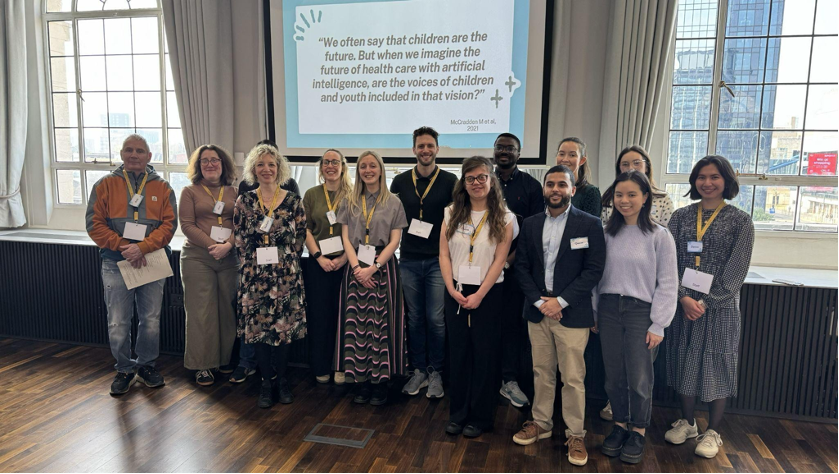
On March 21, 2026, young people, parents, clinicians, researchers and technology experts came together for the launch of the AI Youth Council.
The day had 2 main goals:
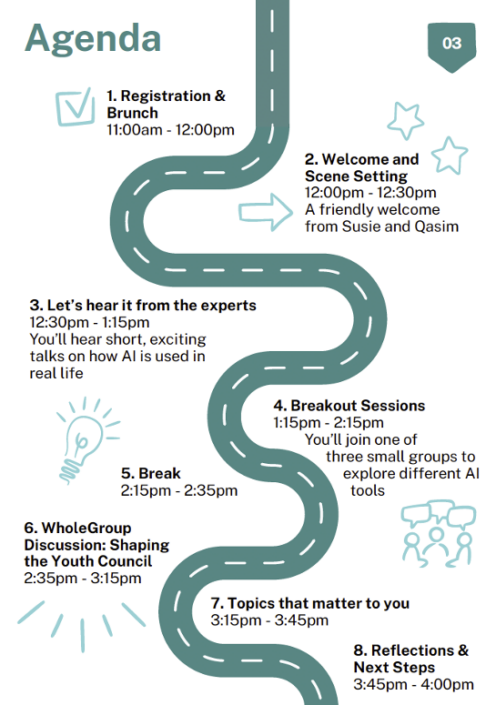
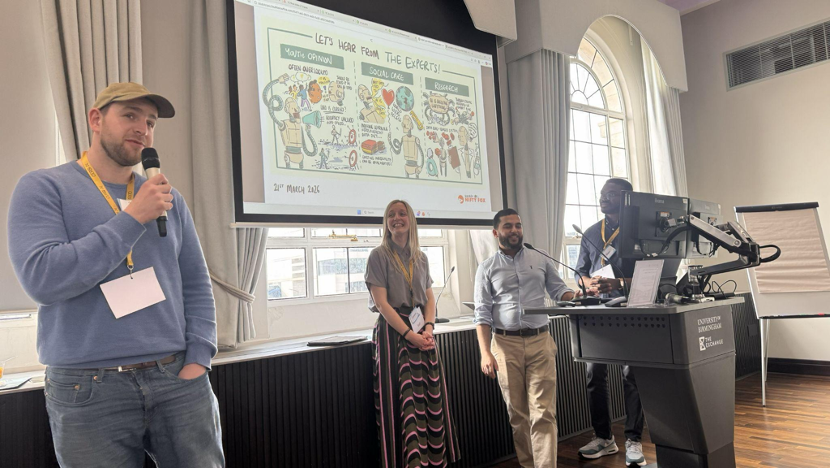
The event began with introductions from the team and presentations on how AI is already being used in healthcare. We heard from Professor Susie Shelmerdine & Dr Qasim Malik about the background to setting up the AI Youth Council, and from Lauren Lee about her journey from youth advocate to now young person facilitator for the Council.
We then listened to a series of talks to set the scene for what AI can do, where it’s being used, and why it matters to young people and their health. This included talks on how AI tools are built and used in clinic (Mamun Rashid), how we check AI is working properly and safely (Azad Hussain) and how it’s helping doctors look at broken bones on X-rays (Susie Shelmerdine)
One memorable part of the morning was a live group demo of TORTUS by Maaike Kusters and Alastair Hill. TORTUS is an AI medical scribe, which is a tool used by healthcare professionals that transcribes (takes speech and turns it into text) and summarizes patient conversations. The demonstration helped us see how AI could support a doctor and patient in a clinic appointment to write notes. In the demo we came up with a pretend scenario of a patient and symptoms. I had previously seen a doctor use AI scribe technology during one of my own appointments, so having the opportunity to see it work in real time was exciting! I was surprised by how it picked up on tiny details, such as an event the patient mentioned attending a few days prior, to make the patient notes more comprehensive.
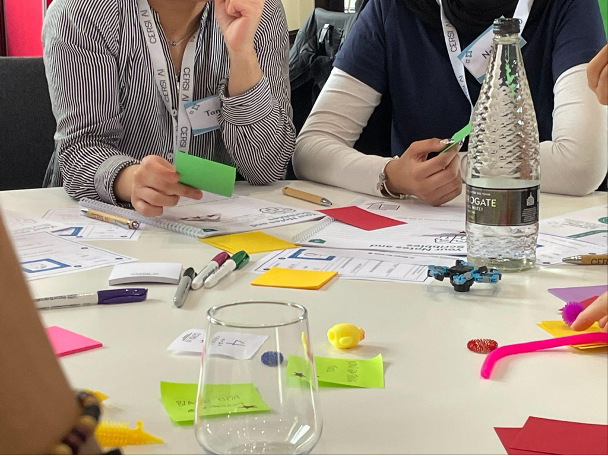
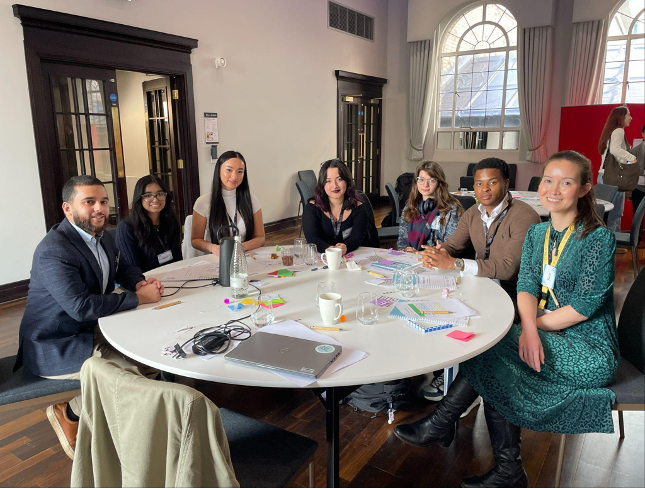
After the talks and demos by the experts, we split up into breakout groups which were divided by age range. We discussed three main topics: AI scanning tools, AI medical scribes, and the use of AI chatbots in healthcare. These discussions allowed everyone to share views, ask questions, and think about what matters most to them if these technologies were used in their own care, or for their siblings or friends.
In my group, we spent some time talking about how chatbot services used for healthcare can improve. I enjoyed being able to have an open discussion about every facet of chatbot use, including safety, accessibility, and regulation. At one point in the discussion, we considered why people might resort to Large Language Models (an advanced form of AI) like ChatGPT when they feel ill.
It was also really interesting to hear everyone connect their personal experiences to the discussion. For example, on our table Maria, AI Youth Council Mental Health Lead, recounted her experience staying informed on the March 2026 Meningitis B outbreak in Kent. She stated that after a Google search on the topic, Google’s AI overview provided her with information from Reddit before NHS sources. Our group concluded that when searches concern health, AI chatbots should only rely on trusted sources to provide information.
Other groups talked about what mattered to them when doctors use AI to read scans, and how AI scribes might change the sorts of conversations patients have with their doctors and nurses. After talking about our topic for some time, we all swapped around and had the chance to discuss the topics that we hadn’t yet had the chance to talk about.
In the afternoon, we shifted our focus to discussing the future of the AI Youth Council and what that would look like. We had many conversations about the purpose of the youth council, the roles within the council, and ideas for future projects. We were interested in how the AI Youth Council could be a voice for children and young people to explore the impact of AI.
One thing that surprised me the most was how children as young as nine recognized the importance of AI education and literacy for youth, citing it as a key purpose of the council. Although the younger participants used language that reflected their age, it was clear they shared the same notion of how important an AI Youth Council was as the older children.
All of the young people I talked to agreed that youth should have a great deal of say in policy surrounding AI in healthcare, especially when it affects them. This was reflected in the discussions and written feedback, as well as being the main reason many participants attended.
As one child said:
“The purpose is to keep the focus on… people even when it’s easier and faster not to do this.”
This sentiment captured the central idea of the event and was reflected in the conversations that unfolded. One of the main purposes of the Council that youth identified was that AI shouldn’t replace anyone’s job, but should help people do their jobs more effectively and efficiently. They also expressed that AI should support the human connection that is essential to healthcare rather than replace it.
The Launch Day ended with each group feeding back their key points and takeaways from the day, followed by final questions to the experts. The event was also visually scribed by Liam, an artist at a company called Nifty Fox. He had been listening to our conversations throughout and been doing live drawings to bring our discussions to light. At the end of the day he shared his amazing artwork. It was really impressive seeing our thoughts being drawn out in real time, and the graphics summarised our conversations well.
It was clear how much thought and effort had gone into making the event a success as it came to a close. A big thank you to all of the staff behind the event, the members of the youth council, and the parents and guardians who volunteered their time. We hope that we can keep the momentum going at our future events!