
Prematurity Awareness Month November 2025
Monday 24 November 2025
Jess McNeill
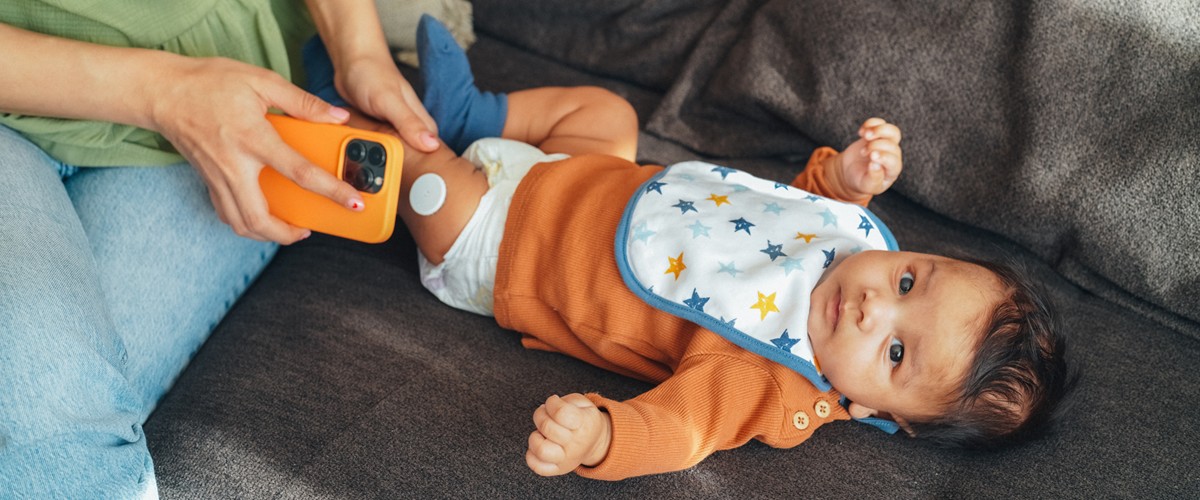
Around 1 in 10 babies across the world are born prematurely and are at a higher risk of developing life-threatening conditions and health complications. As part of Prematurity Awareness month this November, we’d like to share some of the work we do at the NIHR HRC in Paediatrics and Child Health to support maternal, neonatal and perinatal healthcare through research and innovation.
World Prematurity Day has been held internationally each year on the 17th November, though the World Health Organisation has designated 15th November as the date for this day going forward to ensure there is no overlap with other World Days.
November is also recognised as Prematurity Awareness Month for families, healthcare professionals, and researchers to raise awareness of the impact of preterm birth and advocate for better health and care for the babies and families affected each year.
Why is this an important movement?
Prematurity is the leading cause of preventable child deaths and it affects families long after their stay in the Neonatal Intensive Care Unit (NICU). Babies admitted to the NICU are also at a higher risk for health complications later in life.
It’s important to look at the impact of NICU experiences with a wide lens rather than focusing on health outcomes alone. Bliss, the neonatal charity, has launched #NeonatalVoices, to help bring together people with lived experience of the NICU and the long-term impact of prematurity. Experiences of the NICU differs for every family so it’s important to create a space for people to share their perspectives and connect with others. Supporting families through this time is essential for improving outcomes for preterm babies.
There is also a range of systemic, social and economic factors that contribute to disparities in health outcomes for neonatal families. Ethnic patient groups, such as Asian and Black women, are 2-4 times for more likely to die in pregnancy, and areas of high deprivation are associated with higher rates of stillbirth and neonatal death. Most child deaths that occur due to prematurity (at least 80%) happen in low and middle-income countries where there is often less support for maternal health.
How does the NIHR HRC PCH support neonatal research and innovation?
One of the complications of premature birth is the development of severe brain injury that results in life-long disabilities, such as deafness, blindness, and cerebral palsy. There are many children in the UK that also live with neurodevelopment deficits related to early life care that negatively impact their educational and employment potential.
Our Early Life research theme, led by Professor Don Sharkey and Professor Kate Walker at the University of Nottingham, is centred on preterm birth and birth-related injury. Early Life research aims to improve early life healthcare and prevent lifelong health complications for premature infants.
Additionally, Dr Kathryn Beardsall, Co-Lead of our Mind & Body Integration theme based at the University of Cambridge, is a leading expert on neonatal care and how early life health complications have significant impacts in later life for both babies and the family. 80% of parents whose babies were admitted to neonatal care suffer mental illness and babies with NICU experience twice the rate of subsequent psychiatric conditions.
Our Early Life and Mind & Body Integration teams lead on national clinical trials that develop and evaluate new neonatal technologies and they are supporting the next generation of researchers and innovators by supervising PhD students funded by the NIHR HRC in Paediatrics and Child Health.
New £32 million Neonatal Intensive Care Unit in Nottingham
Prof Sharkey and Prof Walker are part of the team based at the new £32 million NICU that opened at the Queens Medical Centre in Nottingham last year. This unit is four times larger than the previous and is home to a new health technology test bed where researchers and innovators can develop and assess new and improved neonatal interventions through ground-breaking clinical trials.
Technology solutions for newborns and their families
Led by Dr Beardsall and her colleagues at the University of Cambridge, the NeWTS project is developing health technology solutions that are designed with the needs of the babies and families in mind. One of these solutions aims to break down a significant barrier to both physical and emotional wellbeing in the neonatal unit – a complex wiring system that monitors important vital signs. These wires make it difficult for much-needed skin-to-skin contact between parents and their child and so the team are developing a wireless system that enables these incredibly important interactions.
Recently, this team have been awarded prestigious NIHR i4i THRIVE funding which will support the development of this technology and a structured programme of entrepreneurial training, mentoring, peer support and networking.”
Improving early diagnosis of movement disorders
Earlier diagnosis of movement disorders, such as cerebral palsy, which are usually diagnosed at 18 months of age, could have a profound impact on the development of young people with these conditions. For this to happen, specialist health professionals would need to observe infants for long periods of time over several months. A project led by Prof Sharkey aims to create a low-cost method to monitor the development of high-risk infants and detect abnormalities in movement much earlier in life.
This project started off as a Proof of Concept project funded by the NIHR HRC in Paediatrics and Child Health (formerly NIHR CYP MedTech) and has now successfully developed a novel, open-source method to classify and analyse infant movement patterns with deep learning techniques.
Find out more about the work we do in our Early Life and Mind & Body Integration themes using the link below.